
In today’s digital era, social media plays a significant role in many legal cases. Brett Willis Law LLC has witnessed an increase in cases where platforms such as Facebook, Instagram, Twitter, and TikTok are directly tied to criminal investigations. Posts, photos, videos, and private messages can be pivotal in establishing connections, timelines, and intent. In Georgia, prosecutors and law enforcement agencies often use social media to corroborate witness statements, demonstrate behavior patterns, or establish presence at specific locations. While these platforms can be instrumental for building a case, they also create opportunities for misinterpretation or misuse if not analyzed carefully.
Harvard Law School Trial Advocacy Instructor Justia 10.0 Lawyer Rating 10 Lawyers You Need to Know Top 100 National Trial Lawyers Avvo Rating 10 Faculty Faculty, Bill Daniel Trial Advocacy Program Rated by SuperLawers





What Constitutes Social Media Evidence 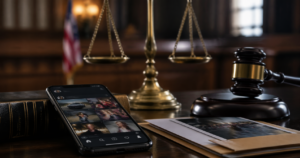
Social media evidence encompasses any information shared on online platforms that may be relevant to a legal matter. This includes public posts, private messages, photos, videos, comments, and even deleted content that can be recovered through forensic tools. Courts in Georgia recognize such evidence if it meets standards of relevance, authenticity, and legality. Examples of what might be used in a criminal context include:
- Geo-tagged photos showing presence at a crime scene.
- Posts or messages indicating intent to commit an illegal act.
- Content demonstrating communication or planning with co-defendants.
- Statements reflecting a person’s state of mind or motives at the time of the offense.
Legal Standards for Collecting Digital Evidence in Georgia
For social media evidence to be admissible, law enforcement must follow strict protocols. Posts that are publicly available may be collected without a warrant, though authentication will still be required. Private messages, direct messages, or restricted content often necessitate a warrant based on probable cause. The chain of custody must be preserved meticulously to ensure the evidence has not been tampered with. Courts may require detailed logs, metadata, and sometimes expert testimony to confirm authenticity, date, time, and source. Failure to meet these standards can result in the exclusion of evidence.
Methods for Gathering Social Media Evidence
Law enforcement may use several methods to collect social media evidence, including:
- Direct platform access through warrants or subpoenas.
- Screenshots or digital captures, preserving metadata.
- Forensic software tools to recover deleted or hidden content.
- Expert verification of digital files to prevent disputes over authenticity.
Each method must comply with Georgia law and federal constitutional protections. Improperly obtained evidence can be challenged in pretrial motions, possibly weakening the prosecution’s case.



Common Scenarios Involving Social Media
Several types of cases frequently involve social media evidence:
- DUI and drug-related offenses: Photos or videos showing the accused consuming alcohol or drugs before driving.
- Assault and harassment: Threatening messages, posts, or comments posted online that demonstrate intent or involvement.
- Theft or property crimes: Posts displaying stolen items or coordinating with accomplices.
- Domestic disputes: Evidence of threatening language or communications exchanged between parties.
Attorneys must analyze not only the content but also the context, as posts may be misinterpreted or taken out of sequence.
Challenging Social Media Evidence
An effective defense strategy often involves challenging the social media content on several fronts:
- Authenticity: Verifying that the account belongs to the defendant.
- Relevance: Determining whether the content is directly connected to the case.
- Privacy: Ensuring that the evidence was obtained legally, respecting Fourth Amendment protections.
- Contextual interpretation: Demonstrating that posts may not reflect intent or actions accurately.
Brett Willis Law LLC emphasizes the importance of scrutinizing each piece of digital content before it is presented in court, understanding the full narrative, and protecting clients’ rights.
SM was a well-known DJ who was stopped on I-85 and arrested for DUI, and his license was taken for a year. A few months later, he got another DUI in a different county. We helped get the second DUI reduced to Reckless Driving with only a $50 fine, and we proved the first officer had no right to stop him. Because of that, the first DUI was dismissed. JF parked at a Publix, police showed up and started bothering him and his friends. They tried to pressure him into letting them search his car, and when he said no, they claimed they saw a vape pen and searched anyway. JF was arrested & charged with several felonies. We filed a motion to suppress the evidence, and they dropped all the charges. Pam killed her longtime boyfriend with a knife one night in their apartment. Our investigation uncovered that Pam had long suffered physical and mental abuse at this man’s hands. Prior to trial, we were able to convince the prosecution agreed to dismiss the murder charges. Pam is now back home with her family.
Court Procedures for Social Media Evidence
In Georgia criminal proceedings, the introduction of social media evidence follows a defined process:
- Discovery: Prosecutors disclose all social media content relevant to the case.
- Pretrial Motions: The defense may file motions to suppress evidence obtained without proper authorization.
- Expert Testimony: Courts often require digital evidence experts to explain authenticity, metadata, and collection methods.
- Trial Presentation: Evidence is presented in a structured format, with attorneys contextualizing its relevance and challenging inaccuracies.
Protecting Yourself Online During Legal Proceedings
Once a criminal matter arises, careful management of social media activity is crucial:
- Refrain from posting content related to the ongoing case.
- Avoid deleting content, as destruction can be interpreted negatively in court.
- Consult with a criminal defense attorney before responding to messages or public interactions that may be used as evidence.
The Role of Skilled Legal Representation
An experienced attorney can make a critical difference when social media evidence is involved. Brett Willis Law LLC provides comprehensive defense strategies to:
- Assess all social media evidence thoroughly.
- Identify improperly collected content or violations of privacy rights.
- Provide context and interpretation that clarifies intent and actions.
- Advise on social media conduct during and after investigations.
Real-Life Examples from Gainesville, Georgia
- A DUI defendant shared photos at a party on social media. Prosecutors might attempt to use this to show consumption of alcohol prior to driving.
- In a drug possession case, text messages exchanged on social platforms may be collected under subpoena to corroborate evidence.
- Domestic violence incidents often involve social media communications that could be misinterpreted, requiring careful analysis by a defense team.
Best Practices for Maintaining Digital Privacy
- Limit social media interactions while under investigation.
- Keep private accounts secure, and avoid posting about legal matters.
- Consult your attorney regarding any social media usage, including indirect references or shared content.
How Brett Willis Law LLC Protects Clients
Brett Willis Law LLC is deeply familiar with Georgia criminal and DUI cases. Our attorneys combine legal knowledge with expertise in digital evidence to:
- Review evidence for authenticity and chain-of-custody compliance.
- Protect your constitutional rights against improper digital searches or seizures.
- Develop strategic defenses based on context and factual analysis.
- Ensure that social media content does not unduly influence case outcomes.
Social media evidence can be powerful in Georgia criminal cases, but it must be handled with care. With the proper guidance, you can protect your rights, challenge unfair interpretations, and present a clear, accurate account of your actions. Brett Willis Law LLC offers consultation and strategic representation for those navigating cases involving digital evidence, ensuring that online content does not jeopardize your future.
This is for informational purposes only and is not legal advice. Consult a licensed attorney regarding your specific situation.
To learn more about this subject click here: 7 Mistakes to Avoid When Facing Criminal Charges in Georgia

 |
|