
The bottom line: A Georgia DUI plea suspends a driver’s license, but it does not always start the driver’s license suspension time from zero. That is because the time previously served on an administrative license suspension (ALS) from the same incident can count toward a later DUI-conviction suspension. Whether the driver can obtain a limited permit—or return to a full license—depends on the type of ALS, whether it is still active, and what else appears on the driver’s DDS record.
Two situations cause particular confusion. The first involves a driver who took a state-administered breath test, received an over-the-limit result, and missed the 30-day ALS hearing deadline. The second involves a driver who refused testing, completed a full year on an ignition interlock permit, and pleaded to the DUI afterward. Georgia law treats these situations differently.
A terminology note: The license suspension discussed here generally follows a state-administered chemical test or a refusal after arrest, usually documented on DDS Form 1205. Refusal to take a handheld roadside breath test is a different test and does not create an ALS suspension. Learn more about DUI testing in Georgia.
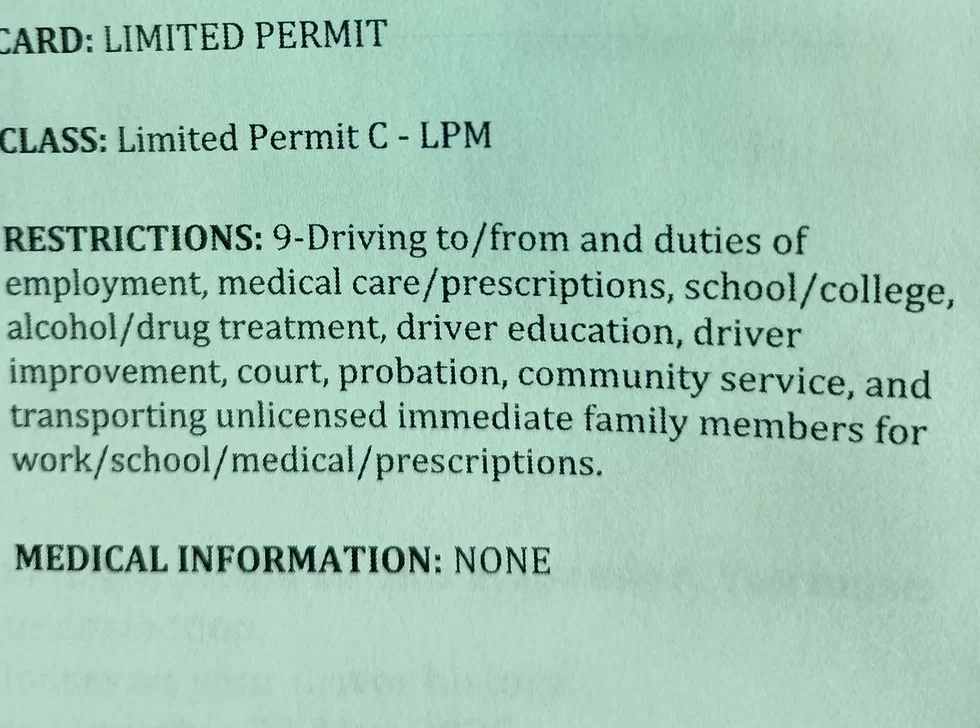
What does a work permit look like?
Watch our informative video about work permits
If I missed the ALS appeal after blowing over the limit, can I get a work permit after a first-DUI plea?
Yes. A Georgia resident who is at least 21 years old, has no prior DUI conviction or qualifying nolo plea within the relevant five-year period, and has no unrelated license withdrawal will ordinarily be eligible to apply for a limited driving permit immediately after a first alcohol-DUI conviction—even if the driver did not request an ALS hearing after the arrest.
This answer assumes the ALS arose from a state-administered test result at or above the applicable legal threshold, not a refusal, and that the ALS and the DUI conviction arise from the same incident.
Missing the hearing deadline waives the hearing
Under O.C.G.A. § 40-5-67.1(g), a driver has 30 days after notice to request an ALS hearing and pay the required filing fee. If the driver does not make a timely request, the right to that hearing is waived. The statute does not say that missing the hearing permanently forfeits every later form of permit eligibility.
Missing the deadline still matters. It gives up the opportunity to challenge the ALS, and the administrative suspension can take effect. It should never be treated as harmless. But the missed hearing, standing alone, does not disqualify an otherwise eligible driver from the limited permit that results from a later first-DUI conviction.
Both same-incident suspensions can be permit-eligible
O.C.G.A. § 40-5-64(a)(1) identifies both a first DUI-conviction suspension under § 40-5-63(a)(1) and a first over-the-limit administrative suspension under § 40-5-67.2(a)(1) as possible bases for a limited driving permit. Section 40-5-64(a)(3) also specifically allows the combination of a DUI-conviction suspension and an over-the-limit ALS when both arise from the same incident.
That same-incident rule is important. Georgia generally does not issue a limited permit when an applicant has multiple, unrelated license withdrawals. The statute makes a narrow exception for this particular pairing.
What happens at the plea?
The DUI conviction is reported to DDS and carries a 12-month suspension for a qualifying first conviction. The driver may apply for a limited permit immediately following the conviction once the license has been surrendered or DDS has processed the relevant ALS form or conviction. DDS—not the sentencing judge—makes the final eligibility determination based on the driver’s entire record.
Note: if DDS has not yet received the electronic conviction, the driver may need a completed first-DUI permit referral from the judge at sentencing.
If I completed 12 months on an ignition interlock permit after a refusal ALS suspension, will a later DUI plea suspend my license again?
The conviction will be recorded, but a qualifying driver ordinarily should not serve a second 12-month period. If the refusal ALS and the DUI conviction arise from the same incident, and the full 12-month refusal suspension has already run, Georgia law credits that administrative-suspension time toward the later conviction suspension.
O.C.G.A. § 40-5-67.2(b) says that an administrative suspension under § 40-5-67.1 counts toward a later suspension imposed because of a DUI conviction arising from the same violation. The credit language is not limited to over-the-limit test-result suspensions; it refers broadly to an administrative suspension under § 40-5-67.1.
A refusal suspension lasts one year. When an eligible driver elects an ignition interlock device limited driving permit, the underlying suspension still runs while the driver is driving on the interlock permit. Georgia’s interlock statutes require a refusal-based interlock period of at least 12 months. Completing that period does not erase the later conviction, but it can satisfy the time component of a first-conviction suspension arising from the same incident.
The license does not necessarily become valid automatically after the plea
This is the practical trap. Even when all 12 months are credited, O.C.G.A. § 40-5-63(a)(1) requires a driver whose license is suspended because of a DUI conviction to submit proof of completion of a DDS-approved DUI Alcohol or Drug Use Risk Reduction Program and pay the applicable restoration fee before the license becomes valid.
In other words, the driver may have no additional suspension time to serve but may still have reinstatement work to finish. The driver should expect the court to report the conviction and should confirm that DDS has:
- credited the full same-incident ALS period;
- received the Risk Reduction certificate;
- received the required restoration payment; and
- returned the driver’s status to valid.
Do not drive after the plea until DDS confirms that the license or permit is valid. A timing or paperwork problem can create a real interruption even when the driver does not owe additional suspension time.
Why do these two situations produce different results?
| Situation | Effect of the later first-DUI plea | Likely next step |
|---|---|---|
| Over-the-limit state test; no ALS hearing; ALS tied to the same incident | The conviction suspension is imposed, but the same-incident ALS/conviction combination can remain eligible for a limited permit. | Apply to DDS for the first-conviction limited permit and provide any court referral or disposition DDS requires. |
| Refusal; full 12-month interlock-permit period completed before the plea | The conviction is recorded, but the completed same-incident ALS period ordinarily satisfies the 12-month time component. | Submit the Risk Reduction certificate, pay the restoration fee, and obtain DDS confirmation of full reinstatement. |
| Refusal suspension still active when the plea is entered | The active refusal can block an ordinary first-conviction limited permit, and the driver’s existing interlock permit may be affected. | Have counsel review the DDS record and the timing before entering the plea. |
Facts that can change the answer
These answers are narrow. A different result may apply when:
- the driver is under 21;
- the driver holds an out-of-state license or a commercial driver’s license;
- the current case involves DUI drugs or a different suspension statute;
- there is a prior DUI conviction or qualifying nolo plea within the applicable lookback period;
- the DDS record contains another suspension, revocation, cancellation, or disqualification;
- the ALS and the conviction do not arise from the same incident;
- the refusal suspension or required interlock-monitoring period was not actually complete when the plea was entered;
- the arrest involved a crash with serious injuries or a fatality; or
- the driver’s permit was revoked or the interlock provider reported noncompliance.
The official Georgia DDS first-DUI guidance warns that an active implied-consent refusal suspension can make a driver ineligible for a limited permit after a first-DUI conviction. That warning does not answer the completed-12-month scenario above, but it is critical when the plea occurs before the refusal period ends.
What should a driver confirm with DDS before and after the plea?
- Check the current record. Use DDS Online Services or DDS 2 GO to review every active withdrawal and the personalized reinstatement requirements.
- Match the incident dates. Confirm that the ALS and the criminal DUI case arise from the same arrest.
- Confirm time served. Identify the actual effective and completion dates of the ALS and, if applicable, the interlock-monitoring period.
- Complete Risk Reduction. Have the certificate ready before the plea when possible.
- Plan for the conviction report. Ask whether the court transmits the disposition electronically and obtain a permit referral or certified disposition if DDS will need it.
- Pay the correct fee. DDS fees and payment methods can change; follow the amount shown in the driver’s personalized DDS instructions.
- Verify before driving. Do not rely on an assumption that credit or reinstatement happened automatically.
Arrested for DUI in Georgia?
You have 30 days to request an ALS hearing or apply for an ignition interlock permit before your license is suspended. Talk to a Gainesville DUI lawyer today.
Free guide: 7 Mistakes to Avoid When Facing Criminal Charges in Georgia
Talk with a Georgia DUI lawyer before the plea
The timing of a DUI plea can affect whether a refusal suspension remains active, whether a limited permit is available, and what DDS will require for reinstatement. A review of the actual DDS record before the plea is much safer than trying to correct an avoidable license problem afterward.
Brett Willis Law represents drivers facing DUI charges and DUI-related license issues throughout North Georgia. For a free strategy session, call (770) 600-1271.
Legal authorities and official resources
- O.C.G.A. § 40-5-63 — first-DUI conviction suspension and reinstatement requirements
- O.C.G.A. § 40-5-64 — limited driving permits
- O.C.G.A. § 40-5-64.1 — ignition interlock device limited driving permits
- O.C.G.A. § 40-5-67.1 — ALS notice, hearing, test-result, and refusal provisions
- O.C.G.A. § 40-5-67.2 — ALS terms and credit toward a later same-incident conviction suspension
- O.C.G.A. § 42-8-110.1 — interlock-monitoring periods
- Georgia DDS manuals and ALS hearing information
This article is general information, not legal advice. License consequences depend on the driver’s complete record, age, license class, test or refusal history, and the disposition of the criminal case. DDS makes the final licensing determination.
Arrested for DUI in Georgia?
You have 30 days to request an ALS hearing or apply for an ignition interlock permit before your license is suspended. Talk to a Gainesville DUI lawyer today.
Free guide: 7 Mistakes to Avoid When Facing Criminal Charges in Georgia

  |
  |