
A Georgia probation violation after a new arrest can create a separate court problem before the new criminal charge is resolved. The arrest itself does not automatically revoke your probation. It can still lead to a probation warrant, continued custody on the probation matter, and a revocation hearing where the State generally must prove an alleged violation by a preponderance of the evidence.
Georgia law gives the court several options after a proven probation violation. Depending on the type of violation, the terms of your original sentence, and the amount of probation remaining, the judge may continue probation, modify its conditions, impose other sanctions, or revoke part or all of the remaining probation as allowed by law.
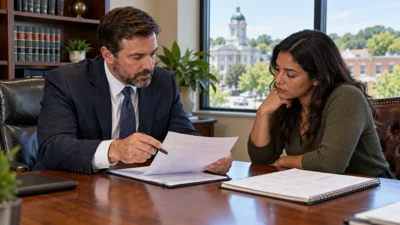
Brett Willis Law LLC represents people facing DUI, criminal, and drug charges in Gainesville, Georgia, and nearby communities. When a new arrest also creates a probation issue, both matters should be evaluated together because decisions in one case can affect the other.

Harvard Law School Trial Advocacy Instructor

Justia 10.0 Lawyer Rating

10 Lawyers You Need to Know
Top 100 National Trial Lawyers

Avvo Rating 10

Faculty

Faculty, Bill Daniel Trial Advocacy Program

Rated by SuperLawers
Why a New Arrest Creates Two Legal Problems
A new arrest while you are on probation can create two legal problems at the same time. The first is the new criminal charge. The second is an allegation that you violated a condition of your existing probation, often a condition requiring you to obey the law.
The two proceedings use different standards. A criminal conviction generally requires proof beyond a reasonable doubt. Under O.C.G.A. § 42-8-34.1, a Georgia court may revoke probation if you admit the alleged violation or if the evidence presented at the revocation hearing proves the violation by a preponderance of the evidence.
That lower burden matters. A court does not always have to wait for a conviction on the new criminal charge before considering whether the conduct behind the arrest violated probation. For that reason, the defense strategy for the probation matter should account for the defense of the new criminal case.
Key Point: A new arrest can create a probation problem before the new criminal charge is resolved. The two cases may move on different schedules and may require coordinated defense decisions.



What Happens First After a New Arrest While You Are on Probation
After a new arrest, your probation officer may learn about the case through law enforcement records, court records, direct notice, or a reporting requirement in your probation conditions. If your written conditions require you to report an arrest, you should follow those conditions. You should also avoid volunteering a detailed factual statement about the new case before you understand what you are required to disclose.
Under O.C.G.A. § 42-8-38, a probation officer who believes that a material violation occurred may have several options. If graduated sanctions were made a condition of probation, the officer may use an authorized graduated sanction in an appropriate case. If the circumstances warrant, the officer may arrest the probationer without a warrant. A warrant may also be issued based on an affidavit from a person with knowledge of the alleged violation.
Once you are brought before the court on the probation matter, the judge may commit you to custody, release you with or without bail while you await further proceedings, or dismiss the alleged violation.
For more information about Georgia bail and bond procedure, see:
https://www.brettwillislaw.com/how-do-georgia-bail-bonds-work/
Can You Stay in Custody After Getting Bond on the New Charge?
You can stay in custody after getting bond on the new charge if the probation matter creates a separate basis for detention. Bond in the new criminal case and release in the probation proceeding are different issues.
This distinction can be confusing because resolving bond on the new charge does not necessarily resolve the probation warrant or revocation proceeding. The court handling the probation matter may make a separate decision about whether you remain in custody while the alleged violation is pending.
For more information about what judges may address early in a Georgia criminal case, see:
https://www.brettwillislaw.com/judges-first-court-appearance-criminal-charge/
SM was a well-known DJ who was stopped on I-85 and arrested for DUI, and his license was taken for a year. A few months later, he got another DUI in a different county.
We helped get the second DUI reduced to Reckless Driving with only a $50 fine, and we proved the first officer had no right to stop him. Because of that, the first DUI was dismissed.
JF parked at a Publix, police showed up and started bothering him and his friends. They tried to pressure him into letting them search his car, and when he said no, they claimed they saw a vape pen and searched anyway. JF was arrested & charged with several felonies.
We filed a motion to suppress the evidence, and they dropped all the charges.
Pam killed her longtime boyfriend with a knife one night in their apartment. Our investigation uncovered that Pam had long suffered physical and mental abuse at this man’s hands.
Prior to trial, we were able to convince the prosecution agreed to dismiss the murder charges. Pam is now back home with her family.
What Happens at a Georgia Probation Revocation Hearing
A Georgia probation revocation hearing focuses on whether you violated the conditions identified in the probation allegation. If the matter is not dismissed at the initial stage, O.C.G.A. § 42-8-38 provides an opportunity for you to be heard on your own behalf, in person or through counsel.
At the hearing, the court may consider testimony from probation officers, arresting officers, witnesses, and other people with relevant knowledge. Depending on the allegations, records, videos, photographs, test results, and other evidence may also become part of the hearing.
The State still has to prove the alleged violation under the applicable standard. The lower preponderance standard does not mean that an arrest alone proves every alleged violation. The defense can examine whether the evidence actually establishes the conduct alleged in the revocation petition and whether the State is relying on incomplete, unreliable, or legally insufficient proof.
The notice of violation also matters. A court should address the violations that were actually alleged rather than revoke probation on a materially different ground that was not properly raised.
Possible Outcomes After a Georgia Probation Violation
Possible outcomes after a Georgia probation violation depend heavily on the kind of violation that is admitted or proven. O.C.G.A. § 42-8-34.1 creates different revocation rules for general probation violations, new felony offenses, and violations of properly designated special conditions.
For a violation of a general probation condition other than the commission of a new felony, the court must consider alternatives to confinement. If the court determines that an alternative is not appropriate, the statute generally permits confinement for the lesser of the remaining balance of probation or two years.
If the admitted or proven violation is the commission of a new felony, the court may revoke no more than the lesser of the remaining balance of probation or the maximum sentence authorized for the felony that constitutes the violation.
A different rule can apply to a special condition of probation. Under Georgia law, a special condition must be expressly imposed in addition to the general conditions and identified in writing as a condition whose violation can authorize greater revocation. If a properly designated special condition is violated, the court may require confinement for all or part of the remaining balance of the original sentence.
The result in a particular case can depend on factors such as:
- The nature of the alleged new offense.
- Whether the alleged violation involves a general condition or a written special condition.
- Whether anyone was injured.
- Your prior criminal record and probation history.
- Whether there have been earlier probation violations.
- How much probation remains.
- Your compliance with reporting, treatment, testing, community service, and other court-ordered requirements.
- Evidence that supports or challenges the alleged violation.
- Whether a negotiated resolution is available.
A new misdemeanor arrest can still create a serious probation issue. A misdemeanor is not treated the same way as a newly proven felony under O.C.G.A. § 42-8-34.1, but the court may still address the conduct as a probation violation. Other alleged violations, such as missed appointments, failed drug tests, unauthorized travel, or failure to complete a required program, may also be included.
What If the New Criminal Charge Has Not Been Resolved Yet?
If the new criminal charge has not been resolved, the probation case may still move forward. Georgia law does not always require a criminal conviction before a court can decide whether the conduct alleged in the new case violated probation.
That timing can create strategic concerns. Evidence presented at a revocation hearing may overlap with evidence in the criminal case. Statements you make about the incident may also become relevant later.
You should not ignore your probation officer or disregard a reporting requirement. At the same time, you should avoid unnecessary factual admissions before you understand your legal obligations and how a statement could affect the pending charge.
For an overview of criminal defendant rights in Georgia, see:
https://www.brettwillislaw.com/what-are-my-rights-as-a-criminal-defendant-in-georgia/
If the new charge proceeds to arraignment, see:
https://www.brettwillislaw.com/arraignment/
Steps You Can Take After a New Arrest on Probation
The steps you take after a new arrest on probation can affect both matters. Focus on complying with existing court orders while preserving information that may help your defense.
- Read your probation order and written conditions carefully.
- Report the arrest if your probation terms require reporting.
- Avoid giving a detailed account of the incident before you understand your reporting duties and legal rights.
- Follow every bond condition, protective order, and probation condition that restricts contact with another person.
- Keep attending probation appointments unless a court or your probation officer gives you different instructions.
- Preserve treatment records, class certificates, payment receipts, drug-screen records, work records, and community service documentation.
- Save potential evidence from the new case, including messages, photographs, location records, receipts, and witness information.
- Avoid social media posts about the arrest, the alleged victim, witnesses, law enforcement, or the pending case.
- Keep copies of court notices, probation paperwork, bond documents, and any written instructions you receive.
The probation matter may move on a different schedule from the new criminal charge. Addressing both matters early can help you understand deadlines, hearing dates, release issues, and evidence that may need to be preserved.
Special Concerns for Georgia First Offender Probation
Georgia First Offender probation can create additional concerns after a new arrest or probation allegation. First Offender treatment allows an eligible person to be sentenced before an adjudication of guilt, with the possibility of discharge and exoneration after successful completion of the sentence.
Under O.C.G.A. § 42-8-60, a court may enter an adjudication of guilt and proceed to sentence a person as otherwise provided by law if that person violates the terms of First Offender probation or is convicted of another crime during the First Offender sentence.
That means a probation violation can place First Offender status at risk. The original sentencing documents, the exact probation conditions, the alleged violation, and the remaining sentence all need careful review before you decide how to respond.
For more information about Georgia First Offender treatment, see:
https://www.brettwillislaw.com/what-is-the-first-offender-act-how-it-can-benefit-you/
How a Criminal Defense Lawyer Can Help With a Probation Violation
A criminal defense lawyer handling a probation violation based on a new arrest may need to evaluate more than one case file. The review can include the new arrest report, body-camera footage, witness statements, probation records, the original sentencing order, written conditions of probation, and any separate technical violations.
A lawyer can also examine whether the State can prove the alleged violation by a preponderance of the evidence, whether the condition at issue was a general or special condition, how much probation remains, and what statutory limits may apply to a possible revocation.
Because the new criminal case and the probation case may involve overlapping facts, legal advice can also help you decide how to approach statements, hearings, evidence, negotiations, and court dates without treating the two proceedings as unrelated matters.
Brett Willis Law LLC represents people facing DUI and criminal charges in Gainesville and surrounding Georgia communities. The firm can review how a new arrest may affect existing probation and evaluate a defense strategy that accounts for both proceedings.
If you are deciding what to look for when hiring counsel, see:
https://www.brettwillislaw.com/what-to-look-for-in-a-criminal-lawyer-gainesville-ga/
Talk With a Gainesville Criminal Defense Lawyer About a Probation Violation
A new arrest while you are on probation does not predetermine the outcome. The court still must address the alleged violation through the legal process, and the evidence, written probation conditions, probation history, remaining sentence, and statutory limits can all affect what happens.
Brett Willis Law LLC represents clients in Gainesville, Georgia, and nearby communities. To discuss a new arrest, probation warrant, revocation hearing, or related criminal charge, call (770) 600-1271 to schedule a consultation.
This article is for informational purposes only and is not legal advice. You should consult an attorney about your specific situation.

 |
|